
Understanding Plant Breeding Software and Its Impact
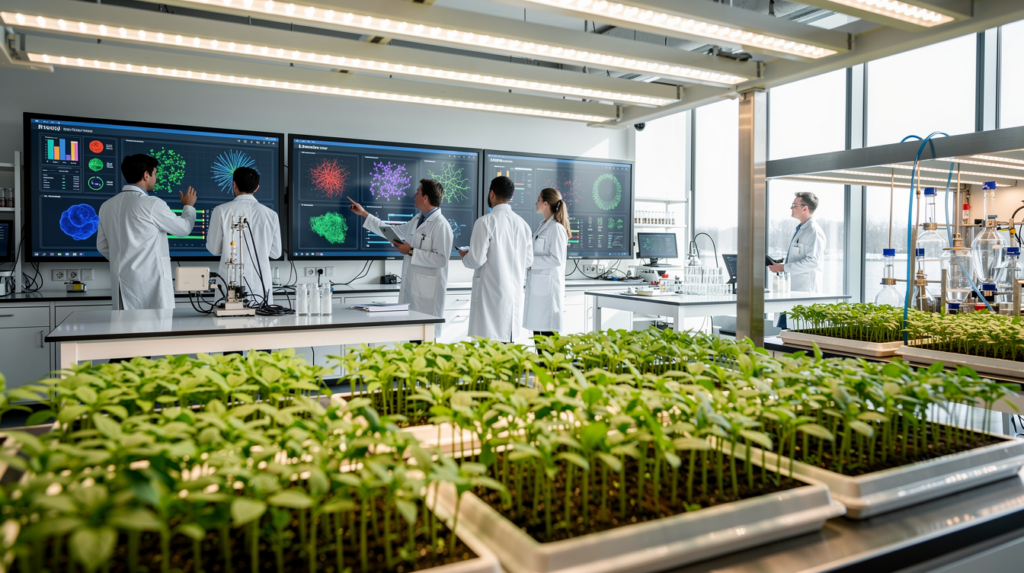
Plant breeding software is a digital framework designed to support research teams through every stage of developing a new plant variety. This encompasses a range of activities, from the initial planning of genetic crosses and the management of germplasm collections to conducting field trials and analyzing performance data. The system consolidates information that is often scattered across spreadsheets, paper notebooks, and separate databases into a unified platform. This integration facilitates more efficient program management, trial organization, data analysis, and decision support.
By centralizing these functions, the software creates a cohesive digital pipeline for the breeding process. The primary benefit is a reduction in the time it takes to bring a new variety to market. This acceleration is achieved by minimizing data handling errors, enabling faster feedback loops between field observations and analysis, and allowing for earlier and more confident decisions throughout the development cycle. As a result, breeders can identify promising candidates and discard underperforming lines more quickly, optimizing resource allocation and shortening the overall timeline.
What Are the Challenges of Traditional Plant Breeding?
Bringing a new plant variety to commercialization is a lengthy endeavor, often requiring a decade or more. The process length is dictated by biological constraints, such as the time needed for plants to mature and produce seed, as well as the necessity of multi-environment testing. To be successful, a new variety must demonstrate stable performance across different geographical locations and growing seasons. Organizations like the Food and Agriculture Organization highlight the complexity of this pipeline.
Significant delays frequently arise from operational inefficiencies. These can include data transcription mistakes, lost records, mislabeling of seeds or plots, and slow analytical turnarounds. A common issue is "decision latency," the period between when data is collected from the field and when it is analyzed to yield an actionable insight. In traditional systems, this can take weeks or even months. Specialized software addresses these problems by standardizing workflows, enabling real-time data validation in the field, and automating analytical processes. This allows breeding teams to make advancement decisions faster and more reliably.
Core Features of Breeding Software for Faster Variety Release
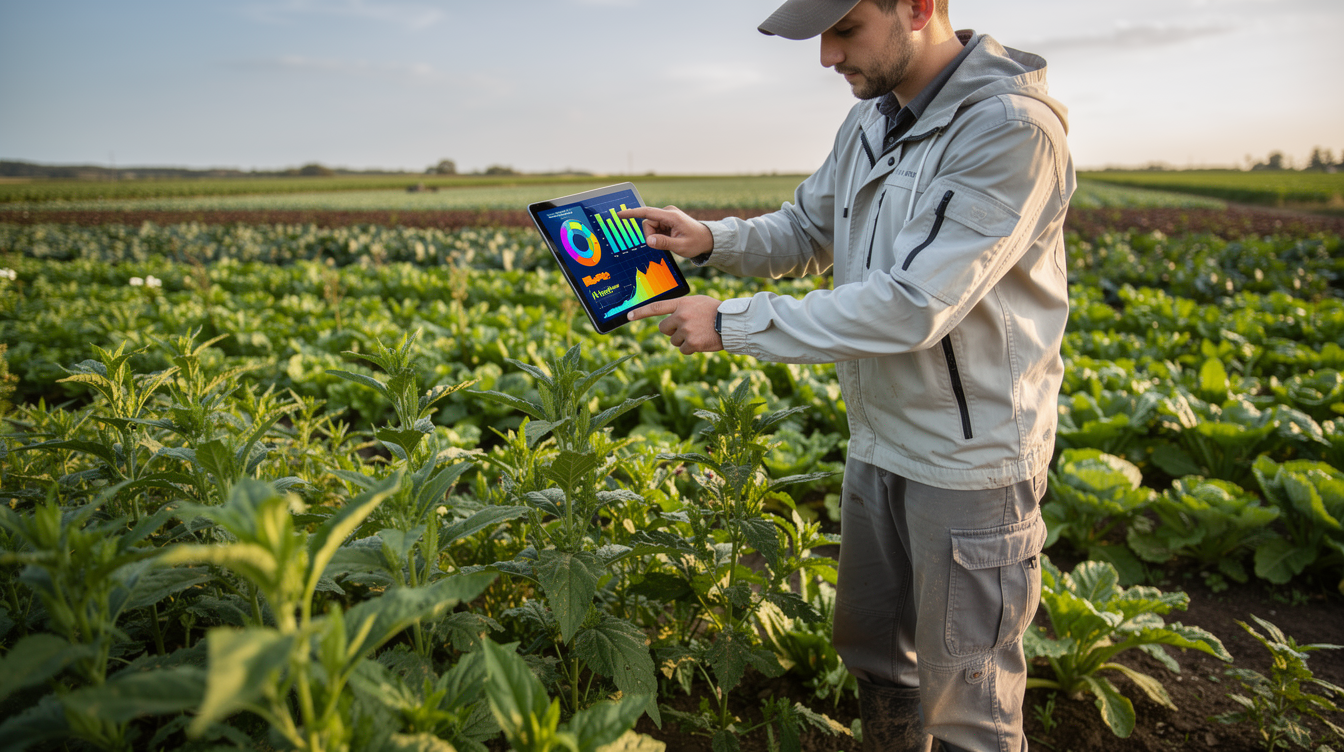
To meaningfully shorten the time to market, plant breeding software must provide end-to-end traceability of all materials and data. This means tracking everything from the ancestry of germplasm, through every cross and selection, to the final trial results. One of the most impactful features is mobile data capture, which allows researchers to record observations directly in the field on a tablet or phone, often without needing an internet connection. This eliminates the need for paper notes and subsequent data entry, which are major sources of errors and delays.
Key functionalities can be grouped into several areas. Program planning tools assist with designing crossing schemes and managing nursery operations. Trial management features support the creation of randomized experimental designs and the generation of field maps and labels. Inventory management ensures a clear chain of custody for seeds and genetic material. Finally, analytics and reporting tools are necessary for interpreting trial data and making advancement decisions. Role-based access and audit trails add a layer of security and accountability, which is especially important for intellectual property protection and regulatory compliance.
Enhancing Data Quality with a Single Source of Truth
Poor data quality can lead to incorrect selections, forcing breeders to repeat trials and lose valuable time. Software mitigates this risk by enforcing data standards. Common failures such as plot swaps, inconsistent trait terminology, or missing metadata are prevented through built-in controls. These can include mandatory fields, pre-defined value lists, and automated checks for outlier data points. By improving data integrity from the point of capture, the software ensures that decisions are based on accurate and reliable information.
A central concept in modern data management is establishing a "single source of truth." This means creating one authoritative repository for all breeding information, including germplasm pedigrees, trial designs, and phenotypic observations. When all team members work from the same validated dataset, it eliminates version conflicts and confusion that arise from multiple spreadsheets. This unified data environment enhances collaboration and ensures that all reports and analyses are consistent and reproducible, which is fundamental for both internal progress reviews and external reporting.
Advanced Analytics and Integration for Faster Selection
Modern plant breeding software expedites selection by automating analytical tasks that were once performed manually. Instead of spending days sorting through spreadsheets, breeders can use the software to rank and filter candidates based on multiple traits simultaneously. By applying selection indices, which weight different traits according to their importance, a breeder can quickly generate a list of the most promising lines for advancement. These systems also create a log of decisions, documenting the reasoning behind why certain material was advanced or discarded, which is valuable for future reference and program continuity.
The ability to analyze performance across multiple environments is another area where software accelerates progress. It quickly reveals genotype-by-environment (G×E) interactions, showing how different genetic lines perform under various conditions. This insight helps breeders identify candidates with broad adaptation or those suited for a specific niche market much earlier in the pipeline. Understanding these interactions helps to de-risk the development process and prevents the costly failure of a variety late in the testing phase.
A key strength of these platforms is their ability to integrate different data types. They link phenotypic data (field observations) with genotypic data (molecular markers) and environmental data, all tied to common identifiers. This allows for a holistic analysis of how genetics and environment influence a plant's performance without the complicated manual task of joining disparate datasets.
Strategic Implementation and Return on Investment
The return on investment (ROI) from implementing plant breeding software is measured through several key metrics. The most direct is a reduction in the time it takes to develop a new variety. Other quantifiable drivers include a decrease in the number of failed or repeated trials due to data quality issues, fewer labor hours spent on manual data entry and cleaning, and improved selection accuracy. Ultimately, an earlier variety release translates directly to accelerated revenue generation. Some organizations are moving towards a single data platform to realize these efficiencies on a large scale.
A simple model for estimating ROI involves calculating the cost of delays. By quantifying the value of bringing a product to market one season earlier, organizations can see a clear financial benefit. Added to this are the direct labor savings from automating manual tasks and the avoided costs of re-running trials. The successful use of these systems has been shown to accelerate variety development and improve the accuracy of crop improvement programs.
For additional details, you can visit the business website at: phenome-networks.com.
Comparing Approaches to Modernization
When transitioning from traditional methods, organizations encounter common pitfalls. A frequent mistake is attempting to digitize a disorganized workflow without first optimizing the underlying processes. Simply transferring chaotic spreadsheet practices into a new software system often fails to yield the desired efficiency gains. Another common issue is neglecting the standardization of trait dictionaries and protocols, which can lead to continued data inconsistencies. Furthermore, underinvestment in user training and a failure to establish clear ownership for data governance can hinder adoption and limit the software's effectiveness.
Choosing the right software involves more than comparing feature lists. The decision should be grounded in the specific needs of the breeding program, including its complexity, the scale of its trial operations, and the types of data it handles. The table below outlines key criteria for evaluating potential software solutions.
| Evaluation Criterion | Key Considerations for Selection |
|---|---|
| Workflow and Crop Support | Does the software align with the specific breeding methods and crop types used in the program, such as inbred lines, hybrids, or perennials? |
| Data Capture Reliability | How robust is the offline mobile data capture functionality? Does it effectively handle poor connectivity and synchronize data without loss? |
| Analytics and Integration | Does the platform offer built-in analytics for key decisions, or does it provide flexible data export to specialized external tools? |
| Scalability and Security | Can the system accommodate growing data volumes? What security protocols and role-based access controls are in place to protect intellectual property? |
What is the primary function of plant breeding software?
The primary function of plant breeding software is to centralize and manage all data and operational workflows related to developing new plant varieties. It helps breeders make faster, data-driven decisions by integrating information on germplasm, pedigrees, field trials, and analytical results into a single, cohesive system.
How does this software reduce time to market?
It reduces time to market by increasing operational efficiency, improving data quality, and shortening decision cycles. Features like mobile field data capture, automated analytics, and centralized data access eliminate manual data entry, reduce errors, and allow breeders to identify promising candidates for advancement much earlier in the development pipeline.
Is plant breeding software only for large companies?
No, while large multinational corporations were early adopters, modern plant breeding software is scalable and used by a wide range of organizations. This includes small to medium-sized seed companies, university research programs, and public-sector agricultural institutes. The platforms can be configured to fit the scope and complexity of different breeding programs.
Can this software integrate with other lab systems?
Yes, many plant breeding software platforms are designed with integration capabilities. They can often connect with Laboratory Information Management Systems (LIMS) for managing genotypic data, as well as with various sensors and high-throughput phenotyping equipment, to create a more comprehensive data ecosystem for the R&D process.
About the Business
Digital solutions for agricultural research are utilized by a diverse group of organizations focused on crop improvement. These users include seed companies of all sizes, professional plant breeders, and variety testers who evaluate new candidates for commercial release. Additionally, agricultural researchers at public institutions and universities leverage these platforms to manage complex experiments and advance the science of plant genetics and breeding.